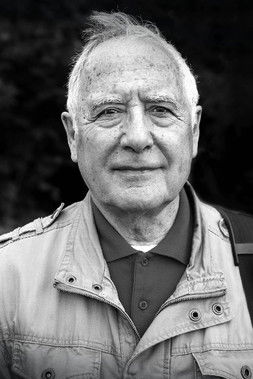
Bernard Baissat
Bernard Baissat, born March 5, 1943, in Nabeul, Tunisia, is a French journalist, television director, filmmaker, pacifist, and libertarian.
After teaching Italian and French literature, Bernard Baissat left teaching in 1966 to become a journalist at ORTF (the regional television station in Dijon), working under Pascal Copeau. In 1967, he became an assistant television director in Paris, first in news and then in educational television. He notably produced programs on economics with the trade unionist Jacques Delors. In 1968, after participating in the May events, he went to Niger as a director for educational television, where he remained for two years. Wishing to continue his work in Africa, he then took up a position as a director/trainer in Bouaké, Ivory Coast, for four years.
In 1974, the Francophone Agency for Cultural and Technical Cooperation appointed him head of a French-language television project in Lebanon. Director of Vidéo Liban for two years, he had to cease operations at the start of the civil war. In 1976, upon returning to France, he worked as a director for FR3. There, he produced numerous reports and collaborated on the new program Mosaïque, aimed at foreign audiences and produced by the Agency for the Development of Intercultural Relations, until 1981. He also became a trainer at the INA (National Audiovisual Institute). He chose the status of freelance director for the performing arts, allowing him to work for different channels and programs. This status also enabled him to make more personal films outside of television. From 1980 onwards, he directed and produced documentaries, including the series "Écoutez..." (Listen...), in which he portrayed libertarian and pacifist figures such as André Claudot, Jeanne Humbert, Eugène Bizeau, May Picqueray, Marcel Body, Aguigui Mouna, Robert Jospin, René Dumont, Serge Utgé-Royo, and André Bösiger. In 1987, he filmed a documentary about the satirical weekly Le Canard enchaîné to mark its 70th anniversary.
In 2000, still interested in new production and distribution possibilities, he collaborated for two years on the European venture of CanalWeb, an internet television service, producing and directing some fifty social history programs with historians from the Sorbonne, the CNRS (Maitron team), and international historians. In 2007, a meeting with a historian in charge of the New Caledonian archives gave him the idea of creating films from the many hours of unseen footage in his personal archives. These films are intended for students, researchers, and anyone interested in the history of New Caledonia. Since 2009, to update screenings of his older films, he has been making short films on the themes of friendship, solidarity, and resistance.
Since 2010, he has been developing his pacifist and libertarian ideas in the newspaper and radio programs Si Vis Pacem (Libertarian Radio) of the French Pacifist Union.
Known for
Directing
Place of birth
Nabeul, Tunisia
Birthday
March 1943